
Welcome to the final installment of The Science of Early Childhood Development series! So far, we’ve covered ecological systems theory, brain development, and the central importance of relationships. To close the series, we’ll explore toxic stress, resilience, and the ways caregivers, communities, and policies can help children thrive even during challenging times.
Is All Stress Bad?

In the face of challenges or potential threats, the human body launches a stress response to help prepare us to face them. We are all familiar with the effects of stress: a faster heart rate, a rush of adrenaline, and changes in our attention, thinking, or even digestion. This short-term adaptive response is the body’s way of preparing and protecting against potential harm to keep us safe. However, when stress becomes severe or prolonged, it can have lasting negative effects. For young children, this can be particularly dire, as it can harm the processes of brain and body development.
There are multiple types of stress, each with different consequences for early childhood development.
Positive stress is everyday stress that helps children grow. This is a normal part of child development. It may activate some of the body’s stress systems, such as increased heart rate, but only for a short period of time. A child may feel positive stress during their first day at a new school.
Tolerable stress is more severe, typically in response to a severe and longer-lasting challenge. This stress is tolerable when a child receives adequate support from a caring adult to help them navigate the experience. A child may experience tolerable stress in response to a natural disaster, but with the support of their caregiver, they can overcome this stress and move forward.
Toxic stress occurs when a child experiences severe, frequent, or long-lasting challenges without the support of a caring adult. This kind of stress creates prolonged activation of the body’s stress systems, which can lead to lifelong health impacts. Another child who experienced the same natural disaster may experience toxic stress if they do not have the support of a caregiver during the event and aftermath.
What is Resilience, Really?

In the face of prolonged, frequent stressors, resilience can help prevent toxic stress and the negative outcomes it can cause. The Center on the Developing Child offers a helpful way to think about resilience. Imagine a scale with positive and negative experiences piling up on each side and counterbalancing each other. Resilience is the fulcrum in the middle of the scale, impacting how easily it tips towards negative or positive outcomes in the face of negative and positive experiences.
A child is born with their “fulcrum” at a certain place, making them naturally more or less sensitive to stress, but the experiences they have can change their resilience and shift this fulcrum. Having many positive experiences, such as responsive caregivers and high-quality learning environments, can move their fulcrum in a positive direction, so it takes more negative experiences to cause negative outcomes. On the other hand, having many negative experiences, such as housing instability or an unavailable caregiver, can move the fulcrum in a negative direction such that only a few stressful experiences can cause negative outcomes.
We sometimes talk about resilience as if it is only an individual capacity – and worse, as if it is inherent and unchangeable – but this is only half of the puzzle. The social-emotional capacities of flexibility, problem-solving, and emotional regulation that are central to resilience are not usually enough to prevent toxic stress and its negative outcomes. And, there is only so much resilience we can developmentally expect from a young child, and certainly not enough to help them cope with situations such as food insecurity, abuse, or homelessness.
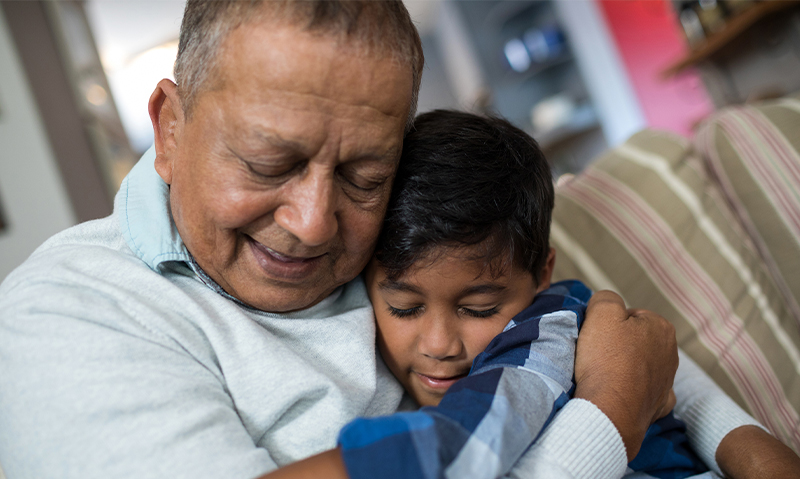
Throughout this series, one message has come up again and again: caregivers matter. In the face of a deeply stressful event, having even one supportive caregiver can be the difference between experiencing toxic stress and its lifelong consequences, or experiencing tolerable stress. Caregivers and their relationships with children matter a lot; to that child, to their own future, and to the wellbeing of our entire communities.
Supporting children’s resilience means helping them build the social-emotional skills needed to navigate challenges. It also means supporting caregivers so they can be present and build strong developmental relationships with children. Just as importantly, it means reducing stressful experiences and increasing positive ones whenever possible.
How Can I Help Reduce Toxic Stress and Build Children’s Resilience?
If we return to the concept of the scale, we can see three options for how to support children: reduce the number of negative experiences, increase the number of positive experiences, or increase resilience. Whether you have children in your family, have a career working directly with children and families, or simply care about the wellbeing of children in your community, you have the power to make a difference.
To reduce negative experiences, you can make it easier for children to access the things they and their caregivers need to thrive. This might look like supporting policies that promote equitable access to affordable housing or healthy food so that children do not have to experience homelessness or food insecurity.
To increase positive experiences, you can support initiatives that provide children with safe places and experiences to play, explore, and learn. This might look like ensuring children have safe parks and other outdoor spaces by participating in clean-up programs or advocating for universal access to high-quality early education and care.
And finally, to help children build resilience, you might help them develop the social-emotional capacities to manage stress and support caregivers in building strong, developmental relationships with children by ensuring their own basic needs are met. This might look like advocating for social safety net programs to support families or increased wages for early childcare educators or embedding social emotional learning opportunities into your classroom or home.
The Science of Early Childhood Development: Final Takeaways
Throughout this series, we’ve explored several key topics in child development so that you have the information you need to be a better caregiver, advocate, and community member.
Children are impacted by everything around them, for better or worse. Thinking about child development through the lens of ecological systems theory allows for a more holistic and solution-oriented view, as well as a broader array of opportunities to support children’s growth.
Children’s brain development happens fast, and these early days lay the foundation for learning throughout their lives. During this period of rapid development, caregivers have an extremely important role. Developmental relationships help children learn through serve-and-return interactions and shape how they understand and experience the world around them.
In the case of extreme hardship without a caregiver’s support, children can experience toxic stress, leading to profound negative consequences for their development. Helping build children’s resilience through strong relationships and coping skill development can reduce the impact of this stress, and understanding the long-term harm of toxic stress in childhood can help motivate the reduction of negative experiences for children and their caregivers.
Children matter, and their caregivers matter too. Our collective wellbeing and economic opportunities all depend on ensuring our children succeed. Join us at Edward Street as we help make that vision a reality.
Check out our other blogs and follow us on Facebook(link is external), Instagram(link is external), and LinkedIn(link is external) for more updates.