
Welcome back to The Science of Early Childhood Development series! In our last post, we set the stage by introducing ecological systems theory, and the concept that children’s development is shaped by all of the nested social and environmental systems they live in. In this post, we’ll zoom in to the level of the individual child and explore how their brain develops.
More than 1 million new neural connections are formed every second during the first years of life. These neural connections that make up the brain connect to the rest of the body, coordinate thoughts, emotions, movement, and all other functions of a child’s body and mind. But, these connections don’t happen on their own; a child’s experiences guide how these connections are made, and whether they create a strong or weak foundation for all future learning.
Brain Development at Warp Speed
During the first few years of a child’s life, these connections develop rapidly. Simple connections form first, then more complex connections are layered in. These early, simple circuits formed in early childhood create the foundation for more complex brain architecture and learning later in life.
Around age three, after all this growth in neural circuits, the brain begins a process called pruning. The “use it or lose it” concept is at play here; connections that are used frequently are saved, and those that are not used are eliminated, making the brain more efficient.
Because of this period of rapid growth and subsequent pruning, young brains are often referred to as “plastic.” In the first years of life, children’s brains are the most flexible and responsive to new learning opportunities as they’ll ever be. However, neural connections can form throughout the lifespan; children who have not had access to the kinds of positive experiences needed for healthy brain development can still learn and grow but may require more support.
Since children’s brains develop so rapidly in early childhood, this period of life is a critical window for support and intervention to ensure all children can enjoy a lifetime of success.
Nature vs Nurture?
The genetic material children inherit from their parents sets the stage for brain development, but these genes don’t tell the whole story. Genes and experiences interact with one another to form neural connections.
Genes are the instruction manual for how the brain develops, and the experiences a child has are the building materials.
Without high quality building materials, even the best instructions are useless.
To build many strong, diverse neural connections, it is important to ensure that children have rich and safe early experiences. Increasing the number of positive experiences (such as a warm relationship with a parent, opportunities to engage with other children, or experiences with new settings and learning materials) and decreasing the number of negative experiences are two ways to help children grow. A third factor is a child’s resilience; we’ll do a deep dive on that concept in the final installment of this series.
The Brain and Developmental Milestones
Evidence of a child’s brain development can be seen in their everyday behavior and progress towards developmental milestones. Babies, toddlers, and young children are learning every moment of every day as they work on building the brain circuitry needed to perceive, understand, and interact with the world around them.
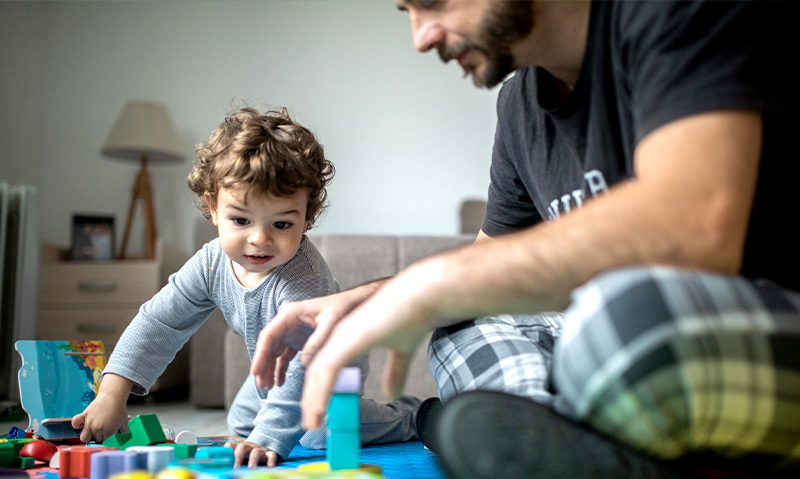
For example, as a child’s social neural circuitry develops, you’ll see their social behavior progress. They’ll begin looking at their caregivers by two months, then smile to get caregivers’ attention by four months, then recognize familiar people by six months. These may seem like small changes, but they are possible due to intense brain development.
To learn more about the many developmental milestones expected for children throughout the first years of life and different activities to help support children’s development at every stage, visit the CDC’s Developmental Milestones website.
How Can I Support Young Children’s Brain Development?

To help build many strong neural connections, caregivers can provide children with enriching experiences that are aligned with their phase of development. Providing rich experiences doesn’t have to be complicated. It can be as simple as speaking to a child to provide them with essential language input, responding to their coos to help build their social skills, or making time and space for play so that children can interact with and explore the world around them.
In the brain-building process, caregivers matter a whole lot. The responsive relationships they have with children allow them to attend to children’s interests. In the next blog post, we’ll share more about the power of caregivers and the developmental relationships they have with young children.
Check out our other blogs and follow us on Facebook(link is external), Instagram(link is external), and LinkedIn(link is external) for more updates.