
How Edward Street's Master Teacher Program strengthens educators, transforms classrooms, and creates brighter futures for children.
Every great teacher deserves a great teacher
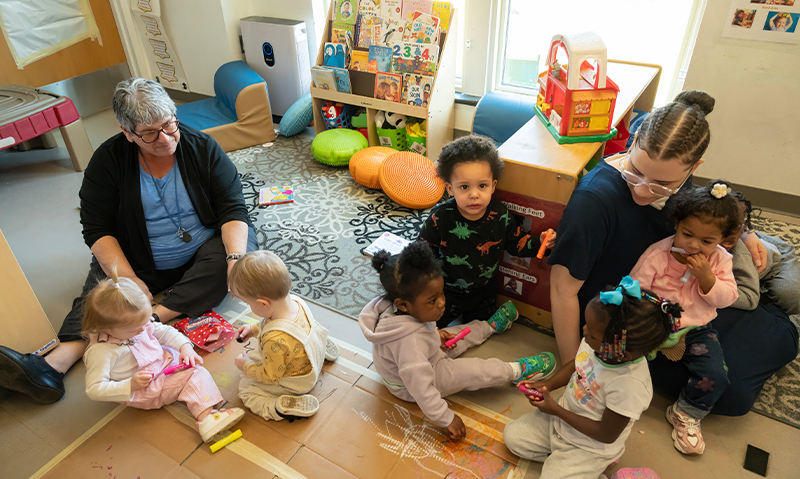
When people talk about supporting young children, the conversation usually begins with the children themselves. But at Edward Street, it starts with the people teaching them.
Because every child deserves a great teacher. And every great teacher deserves someone who believes in them, challenges them, and helps them grow.
That belief is the foundation of Edward Street's Master Teacher Program, an innovative model that has been strengthening early childhood education across Worcester since 2012.
Over the past 13 years, the program has coached more than 300 early educators, directly impacting over 2,500 children. But those numbers only tell part of the story.
The real impact is measured in classrooms that feel calmer. Teachers who rediscover their confidence. Children who receive richer learning experiences because the adults guiding them have the support they need to thrive.
Professional development that happens in real time
Most professional development requires educators to leave their classrooms, a challenge for many early childhood programs operating with tight staffing ratios.
The Master Teacher Program takes a different approach by bringing professional learning directly into the classroom.
Every week, Edward Street's Master Teacher spends the morning inside preschool and toddler classrooms, working alongside educators as learning unfolds. She observes, models teaching strategies, supports interactions with children, and helps educators navigate the challenges that don't exist in textbooks.
Later, they sit together to reflect. What worked? What didn't? How did the children respond? What could we try differently next week?
Those conversations become the foundation for growth.
"The embedded nature of the Master Teacher Program is what makes it such a deeply impactful professional development experience," said Edward Street CEO Kim Davenport. "Educators receive individualized support from someone who deeply cares about their success. Hearing a strategy is one thing, but seeing it work in practice is another."
Unlike a one-day workshop, coaching happens over the course of an entire year. That consistency creates trust, allowing educators to ask honest questions, try new ideas, and grow with the support of someone who understands both the challenges and the joy of teaching young children.
Growth looks different for every teacher
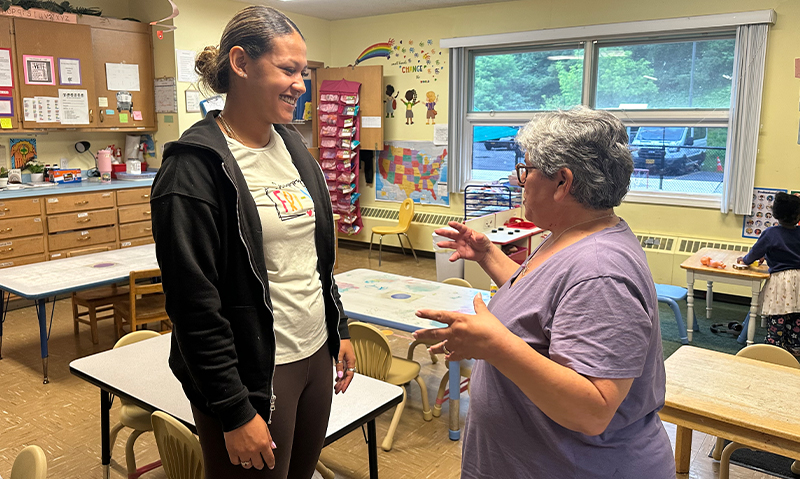
Ask Master Teacher Jo Ann Borinski what makes coaching successful, and she won't talk about lesson plans first. She'll talk about relationships. "A coach starts out as a guest in the classroom," she said, "and hopefully becomes part of the teaching team."
That partnership allows coaching to become personal.
Every classroom is different. Every educator brings unique strengths, experiences, and challenges. Rather than offering one-size-fits-all solutions, our master teacher meets educators where they are, helping them build confidence while refining their practice.
Sometimes, the changes are surprisingly simple.
When Lead Teacher Maritza Perez struggled with busy classroom transitions, Jo Ann suggested introducing sensory "busy bags" to help children stay engaged while moving between activities.
"My entire day shifted," Maritza recalled. "Instead of having a chaotic classroom during transition time, I had a calm classroom with each child engaged."
Other breakthroughs happen more gradually. Jo Ann remembers working with an educator whose naturally loud voice often overwhelmed her classroom. One day, a child quietly told her, "You're scaring me."
Rather than becoming discouraged, the educator embraced the coaching process. Through practice, reflection, and encouragement, she gradually changed the way she communicated with children.
Months later, Jo Ann walked back into the classroom.
"I wondered who this new teacher was," she said. "I was floored, pleasantly surprised, and so proud when I realized it was my 'loud' educator friend."
Those moments remind everyone involved that growth doesn't happen overnight. It happens through trust, consistency, and a willingness to keep learning.
Stronger educators create stronger classrooms
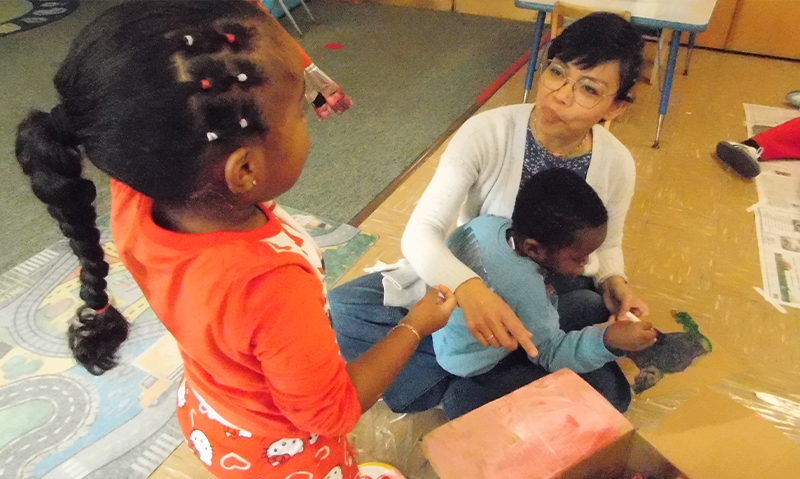
Early childhood educators do far more than many people realize.
They nurture curiosity, teach social-emotional skills, support families, observe developmental milestones, manage complex classroom dynamics, and help lay the foundation for lifelong learning.
Yet they do all of this while working in a field facing significant workforce shortages and high turnover.
"The public expectation is that our jobs are easy, cute, and that we're babysitters," Jo Ann said. "Reality does not meet the public perception."
The Master Teacher Program gives educators something that is often in short supply: time to reflect, space to grow, and someone in their corner.
"The program provides the invitation and space to set and achieve goals, reflect on your practice, and grow as a professional," Kim said. "With a Master Teacher working alongside you, your professional commitment can deepen."
The impact reaches far beyond a single school year.
Every educator leaves the program with new strategies, greater confidence, and stronger teaching practices they carry into every classroom they'll lead in the future.
From classroom insights to community change
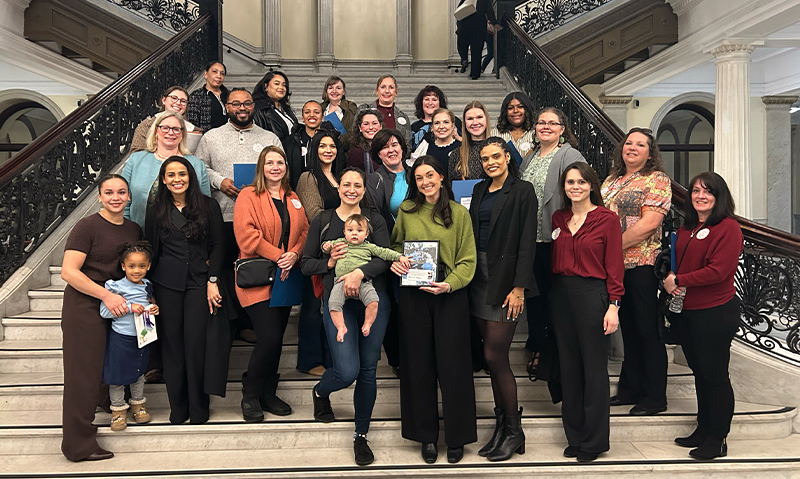
One of the program's greatest strengths is that it doesn't just improve classrooms. It helps improve systems.
Because the Master Teacher spends so much time working directly with educators and children, Edward Street gains a firsthand understanding of the challenges families and providers face every day.
Those insights don't stay inside the classroom.
They help shape new partnerships, inform advocacy efforts, and inspire solutions that strengthen early childhood education across Worcester.
When Edward Street recognized that young children needing special education services were leaving their childcare programs to receive support elsewhere, the organization helped bring together local providers and Worcester Public Schools to explore a better approach. Today, many children receive those services in the early education settings where they already learn and feel comfortable. Read about our itinerant teams here.
It's one example of how listening to educators can lead to lasting community change.
A ripple effect that lasts for generations
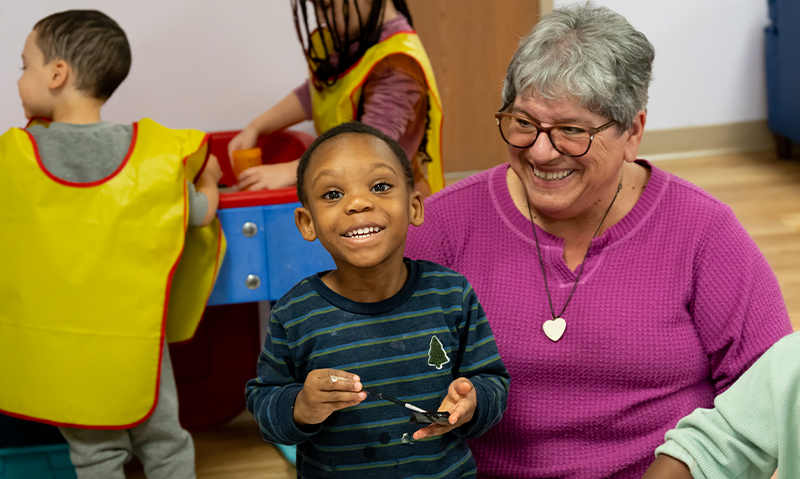
The Master Teacher Program may work with educators for one year.
The impact lasts much longer.
Every teacher who gains confidence, discovers a new strategy, or begins seeing children through a different lens carries those lessons throughout their career. Every child they teach benefits. Every family they support feels the difference. Every classroom becomes a vibrant place where children can learn, explore, and belong.
"The Master Teacher's work with each educator may last for a year," Kim reflected, "but the impact on that educator is lifelong, and the number of children impacted is exponential."
That's the power of investing in educators.
Not because teachers need someone to tell them how to do their jobs.
But because even the best teachers deserve someone who believes in their potential.
And when educators are given the opportunity to grow, the children they teach grow with them.
One classroom at a time.
Check out our other blogs and follow us on Facebook, Instagram, and LinkedIn for more updates.