
When we slow down enough to listen
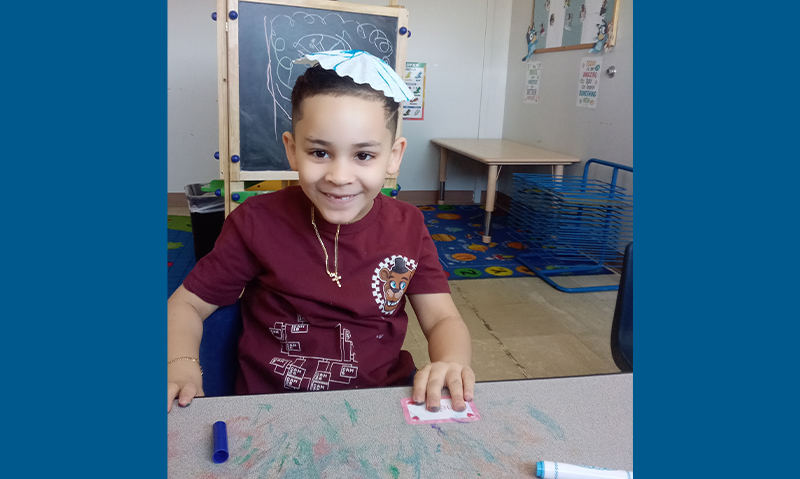
Spend enough time around preschoolers, and they’ll surprise you.
They’ll ask questions you’ve never thought to ask. They’ll notice things adults overlook. And every now and then, they’ll reveal just how rich and thoughtful their inner world really is.
That happened recently during an art activity in Worcester preschool classrooms.
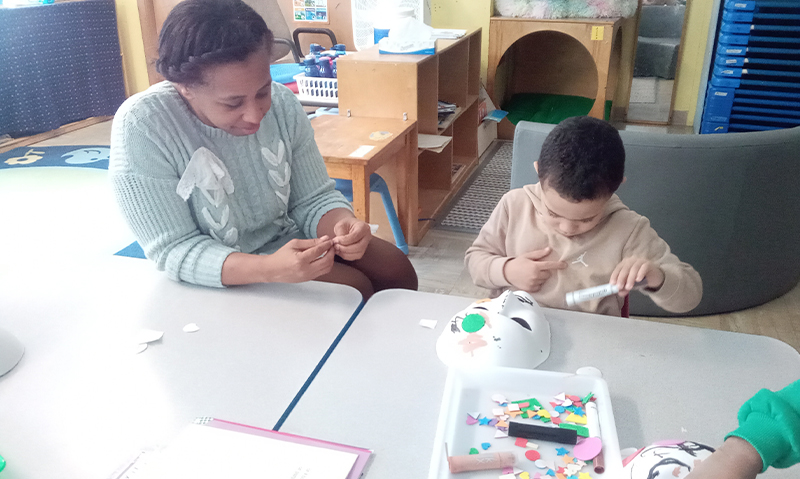
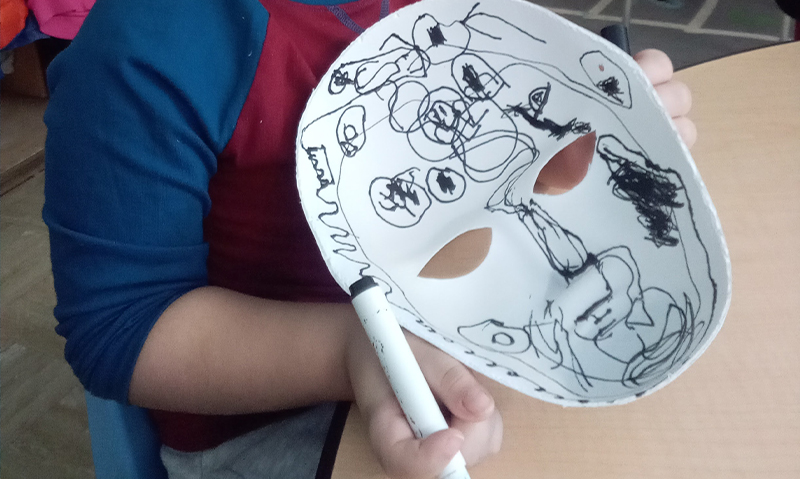
A child was decorating a mask inspired by the book I Like Myself by Karen Beaumont. As he carefully drew on the inside of the mask using only a black marker, Edward Street Master Teacher Jo Ann Borinski and the team asked what he was creating.
“Those are my memories,” he replied.
It was one of many meaningful moments that emerged during Squiggles & Stories: A Who We Are Project, an Edward Street initiative made possible through a grant from the Reliant Foundation. The project brings together early literacy, art, and social-emotional learning in ways that help children explore who they are while supporting educators in building new skills and confidence in the classroom.
More than reading a book
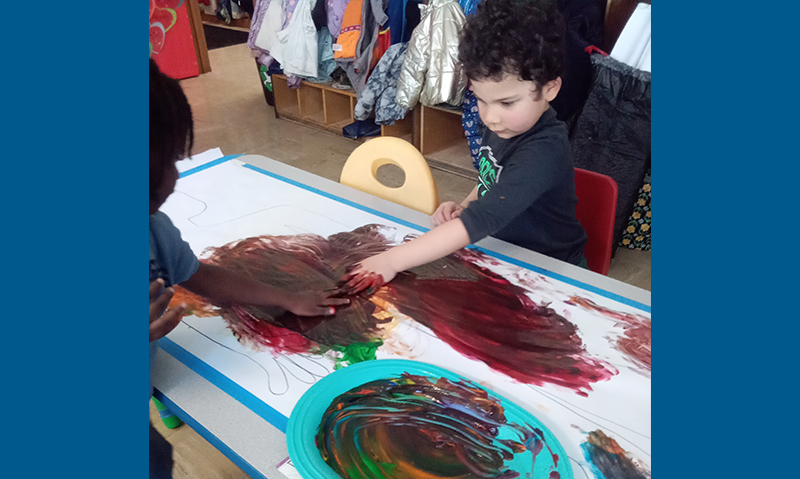
Over three months, children explored three books: I Ain’t Gonna Paint No More, I Like Myself, and Someone Just Like You. Instead of reading each book once and moving on, teachers revisited the same story four times throughout the month.
With each reading, children noticed something new. They recognized patterns. They anticipated favorite moments. They connected more deeply with the characters and ideas in the story. Repeated readings help support early literacy by reinforcing language, vocabulary, and understanding.
The art activities helped bring those stories to life.
Paint, paper, masks, and collaborative projects gave children another way to connect with what they were hearing. The stories became something they could see, touch, and experience for themselves.
And they couldn’t wait for it.
When Jo Ann and expressive arts consultant Kayla Daly - owner of Worcester Center for Expressive Therapies walked into the classroom, they were often greeted with excited questions and comments:
“What are we doing today?”
“I love art!”
“I’m so excited!”
For the team, those moments were signs that children were not only engaged, but eager to learn.
When children lead the way
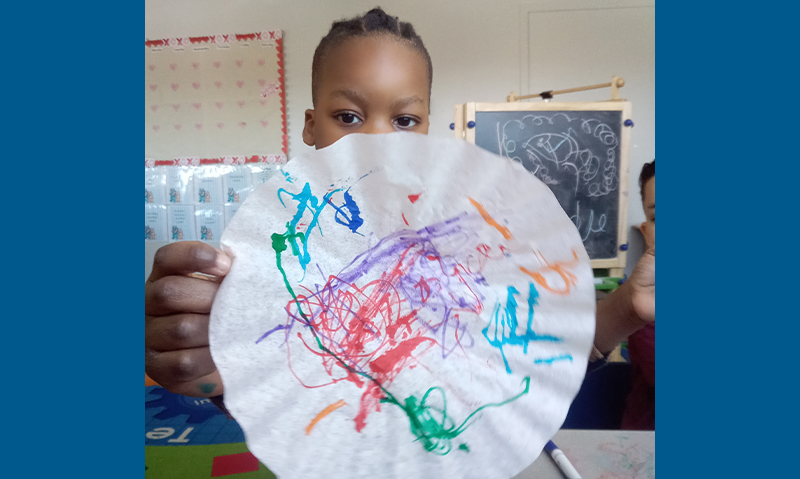
Some of the most memorable experiences came during activities connected to I Like Myself.
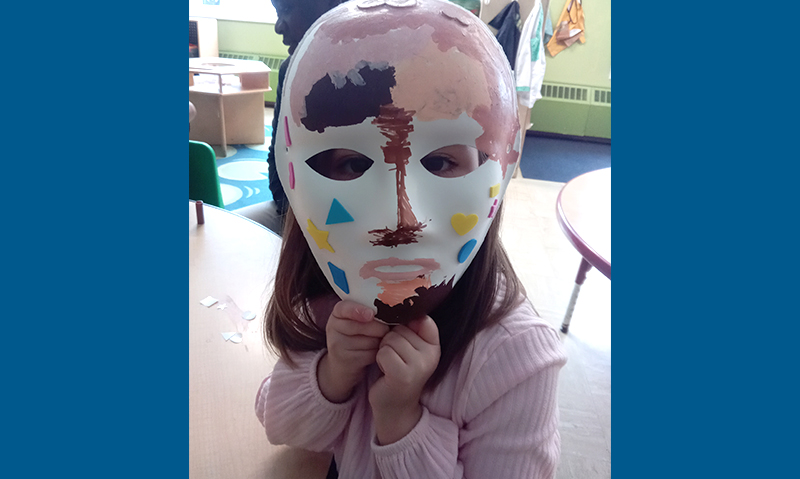
Children created masks that encouraged them to think about who they are, both inside and out. What seemed like a simple art project quickly became something much more meaningful.
When educators reflected on the experience later, every teacher pointed to the mask activity as one of the biggest surprises of the project.
One educator put it simply:
“It blew my mind.”
Children approached the activity with a level of focus, creativity, and thoughtfulness that none of us had expected. Some decorated both sides of their masks. Others used the project to express ideas and emotions that might not have surfaced in a typical classroom conversation.
One child proudly declared, “I am an artist.”
“This was such a wonderful moment,” Jo Ann said. “It was proof that children can be so rich with thought if only we take the time to ask the questions.”
For Jo Ann, these moments reinforced an important lesson; children often have far more to say than we realize. The key is creating opportunities for them to express it.
Learning isn’t one size fits all
While children were learning, educators were growing right alongside them.
As the project progressed, teachers became active partners in shaping the activities. They adapted lessons for younger preschoolers, explored new ways to engage children with different learning styles, and found creative ways to help every child participate.
In one instance, a child’s love of trains became part of the activity. In another, a child who needed a sensory input was offered a thoughtful toy to help him participate more comfortably. These small adjustments reinforced a key lesson: when educators meet children where they are, more children can feel included and engaged.
The goal was not to make every child fit the activity.
It was to make the activity work for every child.
That idea became one of the project’s most valuable lessons.
Not every child learns the same way. Not every educator teaches the same way. And not every meaningful learning experience looks neat and orderly.
In fact, some of the messiest activities turned out to be the most popular.
One child loved I Ain’t Gonna Paint No More so much that he asked for it repeatedly throughout the day, enthusiastically repeating the title again and again.
The irony, of course, was that he absolutely wanted to paint some more.
Supporting the people who support the children
One of the most powerful aspects of Squiggles & Stories happened behind the scenes.
Throughout the project, Jo Ann observed classrooms, recorded portions of the activities, and used those videos as tools for guided reflection with educators. Rather than relying on memory alone, teachers had the opportunity to step back and see themselves in action.
What questions were they asking? How were children responding? Were there moments where they could have followed a child's lead more closely?
These conversations weren't about critique. They were about growth.
Teachers reflected on what worked well, shared ideas with one another, and identified ways to adapt activities to better support the children in their care. Kayla also returned to the classroom throughout the project to offer encouragement, guidance, and another perspective.
Over time, educators became more confident trying new approaches and more comfortable embracing open-ended, creative experiences.
Perhaps most importantly, they began to see these activities not as "extras," but as meaningful opportunities to support children's language development, emotional expression, problem-solving, and sense of identity.
The impact of the project extended well beyond the three months spent in the classroom.
The books may have closed, but the strategies, reflections, and renewed confidence will continue shaping children's experiences for years to come.
Why it matters
Projects like Squiggles & Stories are about much more than creating artwork.
While children were painting, building, and creating, they were also strengthening vocabulary, developing fine motor skills, learning to work together, following increasingly complex directions, and building deeper connections to the stories they heard.
Just as importantly, they were learning about themselves.
They were discovering how to express ideas, emotions, and experiences in ways that felt natural and meaningful.
And educators were gaining strategies they can continue using long after the project ends.
Because helping children grow is not about finding a perfect lesson plan or a one-size-fits-all approach.
It’s about paying attention.
It’s about staying curious.
It’s about asking one more question.
After all, if the team had not paused to ask a child about the drawing inside his mask, they never would have heard the answer:
“Those are my memories.”
Children tell us who they are every day.
Sometimes through words.
Sometimes through stories.
And sometimes through a black marker on the inside of a paper mask.
The important part is making sure we’re listening.
Check out our other blogs and follow us on LinkedIn and Facebook for more updates.