
With more than two decades of early childhood education, Nea Sann brings a deep belief in what children and educators can discover when they learn alongside one another.
A classroom is a small world, and teachers help children discover their place in it. When an educator takes a question seriously or makes time for a child’s idea, children experience what it means to be heard and to contribute.
As Edward Street’s new Master Teacher, Nea Sann will work alongside early childhood educators to help them turn children’s questions and ideas into opportunities to learn. She brings more than two decades of experience in classrooms, Head Start programs, and administration. Her teaching draws on Reggio Emilia, an approach that sees children as capable, active partners in learning.
Giving An Idea Room To Grow
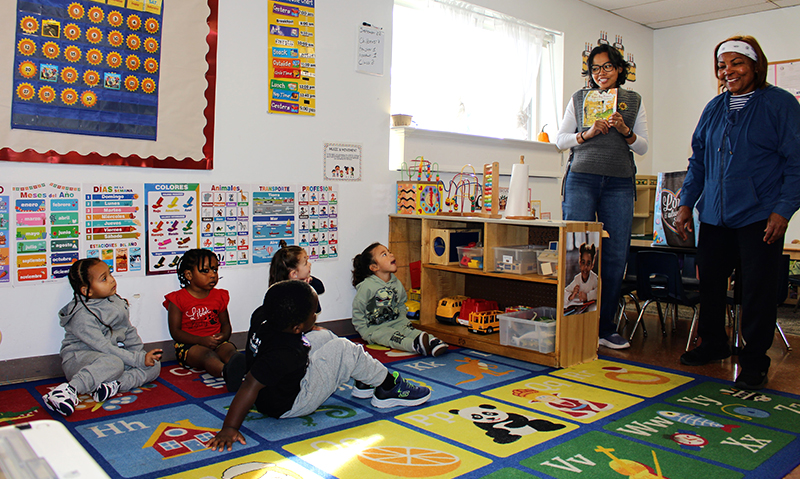
Developed in Italy, Reggio Emilia encourages teachers to build projects around children’s interests, allowing their discoveries to guide what happens next. Learning develops through exploration and discussion rather than a fixed sequence of themes chosen in advance.
Nea recognized her own instincts in that philosophy.
“Discovering this framework gave a name to my instincts, bringing a deeper sense of intentionality and purpose to my classroom,” she says.
For one boy in Nea’s classroom, the starting point was a birthday wish. He wanted a SpongeBob piñata, but his parents couldn’t find one. Using recycled classroom materials, he made his own. His mother celebrated his creation on his fifth birthday.
His birthday wish had given him a problem he wanted to solve and a reason to put his imagination to work. Nea wants classrooms to support this kind of exploration throughout the day, with materials children can reach and use together. She imagines learning happening in “every square inch of the classroom,” even when an adult is not leading the activity.
When A Child’s Work Matters
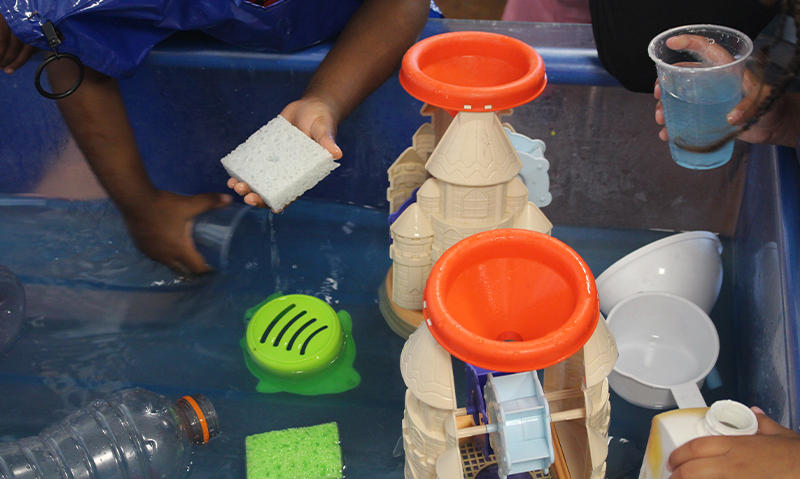
Taking children’s ideas seriously also means valuing what they create. In Reggio Emilia, art is one of the ways children explore and express their thinking.
Edward Street CEO Kim Davenport recalls Nea’s efforts to recover a child’s artwork shortly after Nea joined the organization. A bag of the child’s work had been left at a program in May and was still there after schools closed for summer.
Nea called and emailed to reach someone at the program. She went to the building and knocked, hoping a janitor might be there. Eventually, she reached the program, retrieved the artwork, and arranged to bring it to the parent.
For Kim, that persistence showed how caring and committed Nea is. Her respect for children was evident in the care she gave to something a child had made.
Supporting The Adults Children Count On
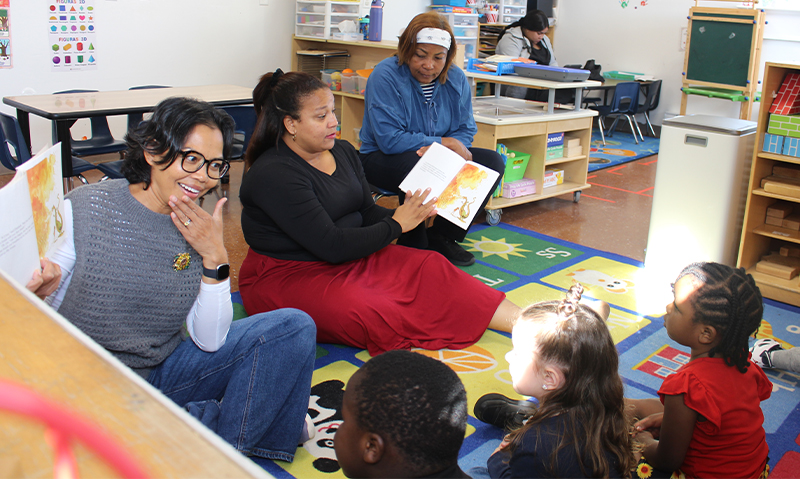
Through Edward Street’s Master Teacher Program, Nea will spend a year working alongside educators in their classrooms. She will observe activities, demonstrate teaching strategies, and meet with teachers to discuss how their students respond.
The partnership begins with educators sharing their strengths and what they know about their students. Nea will help teachers build on their experience and plan learning that reflects the children’s interests and abilities.
Kim calls her “a true champion for each early educator,” adding, “She believes in their capacity and she tells them.”
A teacher who learns to recognize the thinking behind a child’s question can make more room for the next one. A new way of arranging materials can give a whole group more independence. What an educator learns becomes part of what children have the chance to experience.
That is why supporting one teacher can reach so many children. Edward Street’s program has coached more than 300 educators, reaching over 2,500 children.
Sierra Rainville, Edward Street’s Early Childhood Policy Pathways Fellow, values Nea’s knowledge of child development and her enthusiasm for working with others.
“You can’t help but want to work closely with her and learn from her,” Sierra says.
What A Classroom Can Give The World
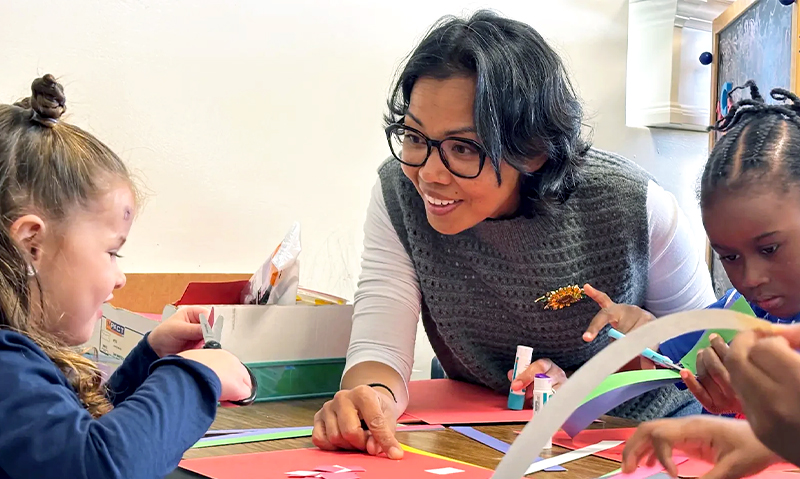
For Nea, early childhood education is part of building a stronger, more resilient society. Her own years in the classroom have taught her how much children and adults can learn from one another. Asked what children have taught her, she says:
“To show up every day, to be resilient, to be curious, to wonder more and, most of all, to be okay with who I am.”
She hopes to keep learning from the educators she will coach. One of her favorite quotes comes from author and educator Parker J. Palmer: “The connections made by good teachers are held not in their methods but in their hearts.”
Through those educators, Nea’s experience can reach children she may never meet. When a teacher takes a child’s idea seriously, that child has a chance to discover what they can contribute. When children work together, they learn that others have something to offer, too.
Those discoveries begin in the small world of a classroom. As children grow, they can carry both the confidence to contribute and the willingness to listen into the larger world they will one day help shape.
Check out our other blogs and follow us on Facebook(link is external), Instagram(link is external), and LinkedIn(link is external) for more updates.